The internet is full of "eat this to boost your progesterone" lists, and most of them overpromise. So let's be honest and useful at the same time. The truth is gentler and more empowering than the hype: food won't spike your progesterone like a drug, but your body literally cannot make hormones well without certain raw materials and nutrients. Giving it those is real, sensible support, and that's what this is about.
Why food supports progesterone — the raw materials
Your body builds progesterone through a production line: it needs building blocks (notably cholesterol from healthy fats), it needs to ovulate well (because progesterone is made by the corpus luteum that forms after ovulation), and it needs various nutrients that act as helpers in hormone production. Food feeds every step of that line. So "foods for progesterone" really means "foods that keep your hormone-production machinery well supplied." Here are the nutrients that matter most.
Source: Progesterone: Natural Function, Levels & Side Effects — Cleveland Clinic. Eating foods with certain vitamins may help support healthy progesterone levels, though research is limited.
The nutrients that matter — and where to find them
Vitamin B6. One of the most consistently mentioned, B6 supports hormone regulation and is often recommended for PMS and for women trying to conceive. Find it in: chickpeas, bananas, spinach, potatoes, salmon, tuna, poultry, and fortified whole grains.
Zinc. Zinc supports the pituitary signals (like FSH) that drive ovulation, and ovulation is what leads to progesterone production. Find it in: shellfish (oysters especially), pumpkin seeds, beef, cashews, chickpeas, lentils and eggs.
Magnesium. Magnesium helps convert cholesterol into hormone precursors and, importantly, calms the stress response (which protects your hormones indirectly). Find it in: dark leafy greens, nuts, seeds, avocado, beans and dark chocolate.
Vitamin C. Vitamin C is concentrated in the ovaries and supports the corpus luteum, the structure that actually produces progesterone. Find it in: citrus fruits, strawberries, kiwi, bell peppers, broccoli and tomatoes.
Healthy fats and enough overall food. This is the one people forget. Your sex hormones are built from cholesterol, so a diet too low in healthy fats — or too low in calories overall — leaves your body short on raw materials. Include: avocado, olive oil, nuts, seeds, eggs and oily fish. Eating enough matters as much as eating the "right" foods.
Sources: Top Foods To Boost Progesterone — Rupa Health; 9 Ways to Increase Progesterone — Dr. Jolene Brighten. B6, zinc, magnesium, vitamin C and healthy fats support the body's progesterone production; healthy fats and adequate calories provide the cholesterol that is the precursor to sex hormones.
A simple progesterone-supporting plate
You don't need a special diet — just a varied, nutrient-dense one. A day that naturally covers these nutrients might look like: eggs with spinach and avocado in the morning; a lunch of salmon or chickpeas over leafy greens with peppers and pumpkin seeds; a snack of nuts or yogurt with berries; and a dinner with beans or lean meat, plenty of vegetables, and olive oil. Citrus or kiwi for vitamin C, a little dark chocolate for magnesium. Nothing extreme — just real food, covering the bases.
The thing that matters as much as food — stress
Here's something the food lists rarely mention: chronic stress can work against your progesterone. High cortisol interferes with the hormonal signalling that leads to ovulation and progesterone production. So eating enough (not under-eating), including magnesium-rich foods that calm the nervous system, protecting your sleep, and genuinely managing stress can support your hormones as much as any single nutrient. Food and calm work together.
The honest bottom line
Eating well genuinely supports your hormonal health — it gives your body the nutrients and raw materials it needs to make progesterone and keep your cycle running smoothly. But if you suspect your progesterone is genuinely low (irregular cycles, spotting, fertility struggles), food is not a substitute for seeing a doctor. Low progesterone can only be confirmed with proper testing, and real deficiencies may need medical support. Think of good nutrition as the foundation, not the whole house.
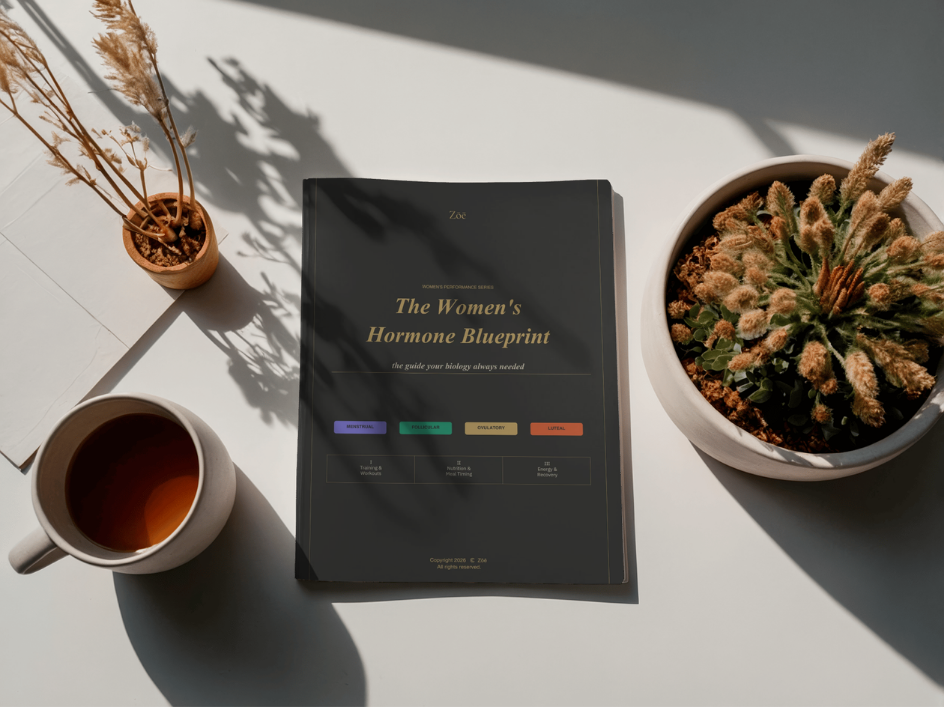
To understand how progesterone fits into your whole cycle, see what progesterone actually does, and for the full phase-by-phase approach to eating with your hormones, The Women's Hormone Blueprint lays it out.
Andreea Mighiu is a women's hormonal health educator and the founder of Zōē. She works alongside a registered dietitian and an endocrinologist to ensure content reflects current clinical understanding. She is an educator, not a physician or dietitian — Zōē's content is designed to inform, not to replace personalised medical or nutritional advice.
References
1. Progesterone: Natural Function, Levels & Side Effects. Cleveland Clinic. my.clevelandclinic.org
2. Top Foods To Boost Progesterone Naturally. Rupa Health. rupahealth.com
3. 9 Ways to Increase Progesterone & Boost Fertility. Dr. Jolene Brighten. drbrighten.com
This article is educational and not a substitute for medical or nutritional advice. If you think your progesterone may be low, please see a doctor for proper assessment rather than relying on diet alone.