What PCOS does to the hormonal cycle — the mechanism
Polycystic ovary syndrome is primarily a condition of hormonal dysregulation — elevated androgens (testosterone and DHEA), insulin resistance, and disrupted communication between the hypothalamus, pituitary and ovaries. The result is a hormonal environment that makes ovulation irregular or absent, produces the characteristic symptoms of PCOS — acne, hair growth, weight gain, irregular cycles, fatigue — and creates a cycle that is difficult to track and therefore difficult to work with.
Understanding this mechanism is the starting point for understanding why cycle syncing needs adaptation for PCOS — and why the adaptation is worth making. The hormonal principles remain the same. Estrogen rising supports energy and performance. Progesterone (when it is produced) calms the nervous system and raises metabolic rate. Cortisol sensitivity increases in the luteal phase. Insulin sensitivity is highest in the follicular phase. These relationships hold whether cycles are regular or not — it just takes more attention to identify which phase you are actually in.
The most important adaptations — PCOS-specific cycle syncing
Track symptoms not calendar dates. A woman without PCOS can assume a roughly 28-day cycle and plan accordingly. A woman with PCOS cannot. Basal body temperature tracking every morning gives you reliable data on whether and when ovulation is occurring. LH strips can also help, though note that chronically elevated LH in PCOS can produce false positives. Fertility awareness apps designed for irregular cycles — rather than standard period trackers — are more appropriate tools.
Prioritize insulin sensitivity in every phase. Insulin resistance is central to PCOS and affects how every phase of the cycle functions. Adequate protein at every meal, complex carbohydrates over refined, reduced ultra-processed foods — these are not just general health recommendations for women with PCOS. They are the nutritional foundation without which phase-specific adjustments have limited effect.
Manage cortisol more carefully than average. Elevated baseline cortisol is common in PCOS and compounds the hormonal disruption of the condition. High-intensity training — particularly chronic HIIT and long-duration cardio — further elevates cortisol. Prioritising compound resistance training over high-intensity cardio, protecting sleep, and reducing training intensity in the late luteal phase (when detectable) all reduce cortisol load and produce meaningful improvements in PCOS symptoms over time. Read more about how cortisol disrupts the hormonal cycle.
Support estrogen metabolism actively. Cruciferous vegetables — broccoli, cauliflower, Brussels sprouts — support liver estrogen clearance through DIM production. This is particularly important in PCOS where estrogen metabolism can be impaired. Read more about estrogen dominance and how to address it.
Getting started — a practical first week
Start tracking today regardless of where you are in your cycle. Download a BBT thermometer. Take your temperature every morning before getting up. Record it in a notebook or app. Within four to six weeks of consistent tracking you will begin to see a pattern — or the absence of one — that tells you what your hormonal environment is doing.
Add magnesium glycinate 375mg daily. Zinc 25mg daily. Vitamin D to target 50 to 80 nmol/L. Inositol 2g to 4g daily — myo-inositol specifically has the strongest evidence base for PCOS, with multiple studies showing improvements in insulin sensitivity, cycle regularity and androgen levels. These four supplements address the most consistent nutritional gaps in PCOS and produce measurable changes within two to three cycles.
Replace chronic HIIT with compound resistance training three times per week. Keep cardiovascular work to moderate intensity — walking, cycling, swimming — rather than high-intensity intervals. This single training adjustment reduces cortisol, improves insulin sensitivity and supports body composition more effectively than the high-intensity approach most fitness advice recommends.
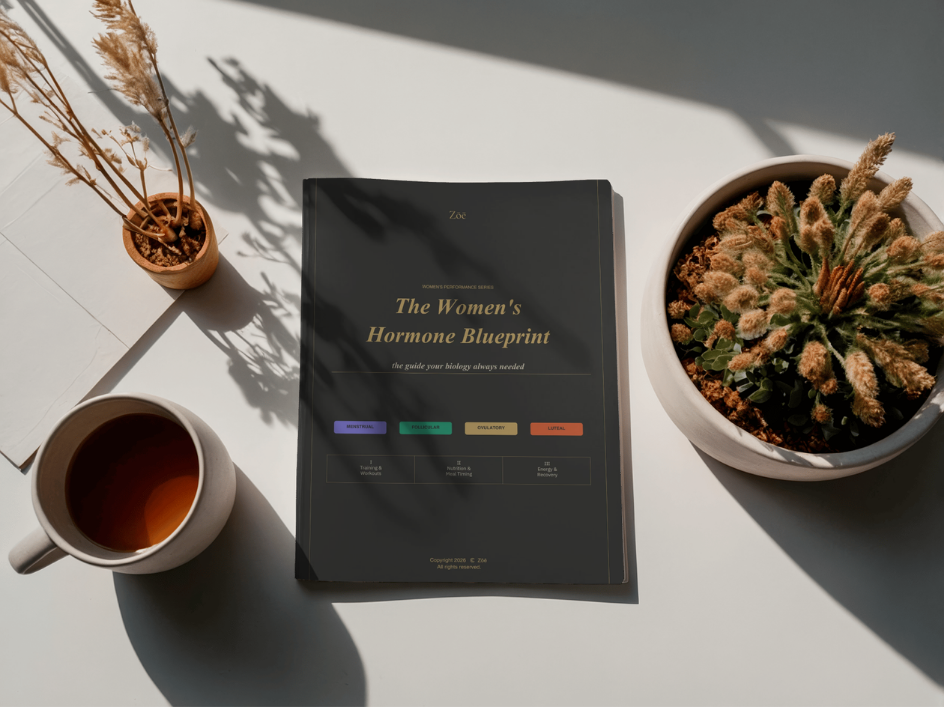
A note on the research behind this: The founder of Zōē spent years working with specialists across endocrinology, sports science and nutritional medicine — investing hundreds of thousands in clinical collaboration to build a complete picture of the female hormonal system. The Women's Hormone Blueprint is the practical result of that research, distilled into 60 pages every woman can use.
For the complete framework — phase-specific training, nutrition, supplementation and cycle tracking adapted for the female hormonal system — The Women's Hormone Blueprint gives you the science and the practical protocols in 60 pages. Combined with the daily tracking in The Aligned Woman Journal, this becomes the complete tool for understanding your hormonal pattern regardless of cycle regularity.