Why belly fat is different from other fat — the cortisol connection
Not all body fat is the same. Fat stored in the hips and thighs — peripheral or subcutaneous fat — is estrogen-sensitive and metabolically relatively inert. Fat stored in the abdomen — visceral fat, around the organs — is cortisol-sensitive and metabolically active. These two fat depots behave differently, respond to different hormonal signals and require different approaches.
Visceral abdominal fat has a higher density of cortisol receptors than any other fat depot in the body. When cortisol is chronically elevated — from stress, sleep deprivation, overtraining, or caloric restriction — these receptors receive more stimulation and the abdominal fat depot expands preferentially. This is why the standard advice of "eat less and do more cardio" often worsens belly fat accumulation — both restriction and chronic high-intensity training elevate cortisol, directly stimulating the very depot the woman is trying to reduce.
Reference: Björntorp P, Do stress reactions cause abdominal obesity? — Obesity Reviews, PubMed.
The insulin sensitivity piece — why it changes across your cycle
Insulin sensitivity — the body's ability to efficiently use carbohydrates for energy — changes measurably across the menstrual cycle. In the follicular phase, insulin sensitivity is at its highest. The body processes carbohydrates efficiently, fat mobilisation is supported and the same meal that is handled cleanly in week two produces a larger insulin response in week four.
This matters for belly fat specifically because insulin resistance — which occurs in the luteal phase relative to the follicular phase — promotes abdominal fat storage. The same caloric approach that supported fat mobilisation in week one now promotes fat storage in week four. This is the mechanism behind the experience of consistent effort producing inconsistent results across the month.
The practical implication: the follicular phase is your most effective fat loss window. The luteal phase requires a different approach — maintenance rather than deficit, complex carbohydrates to support serotonin and reduce cortisol, and reduced training intensity to prevent cortisol overload. Read the complete guide to the best time of month to lose weight.
What actually reduces belly fat in women — the evidence-based approach
Resistance training over chronic cardio. Compound resistance training — squats, deadlifts, presses, rows — builds the muscle that protects metabolic rate and does not chronically elevate cortisol the way high-intensity cardio does. Three resistance sessions per week consistently produces better abdominal fat reduction results than daily cardio in women with elevated cortisol.
Adequate protein at every meal. Protein stabilises blood sugar, reduces insulin response, supports muscle maintenance and increases satiety. Minimum 1.6g per kg of bodyweight daily. At every meal — not concentrated in one.
Sleep protection. Sleep deprivation of even 30 minutes per night measurably elevates cortisol and accelerates abdominal fat accumulation. Protecting sleep is not a passive wellness recommendation — it is an active fat loss strategy for the abdominal depot specifically.
Magnesium glycinate 375mg in the luteal phase. Directly regulates HPA axis cortisol response. Improves sleep quality. Reduces the cortisol-driven abdominal fat storage that peaks in the premenstrual week.
Phase-specific caloric approach. Moderate deficit in the follicular phase. Maintenance in the luteal phase. This prevents the cortisol spike from luteal phase restriction that promotes the very abdominal fat storage you are trying to reduce.
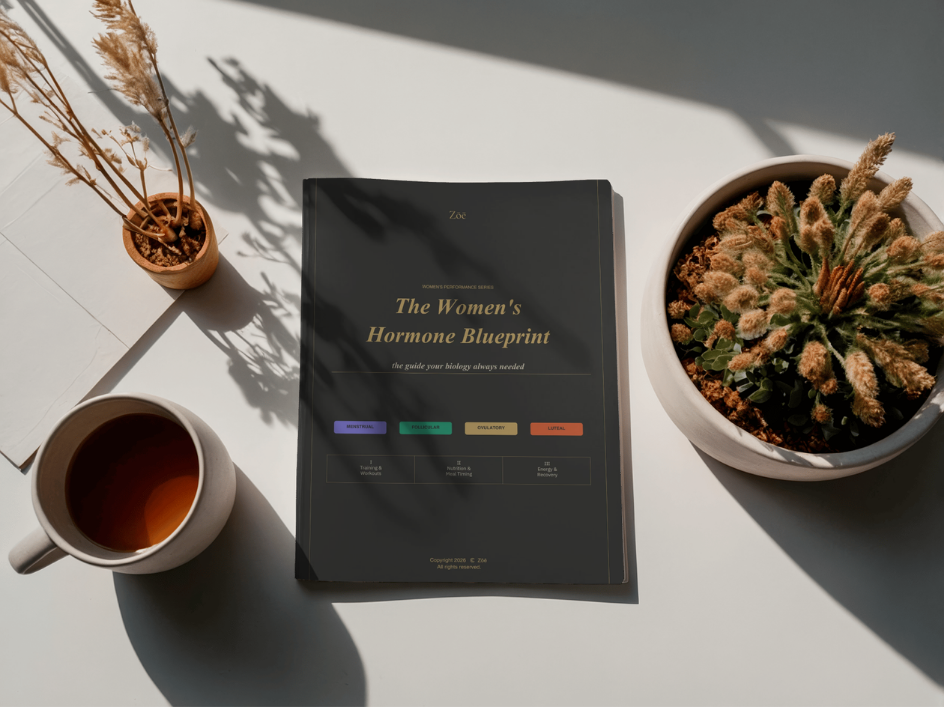
A note on the research behind this: The founder of Zōē spent years working with specialists across endocrinology, sports science and nutritional medicine — investing hundreds of thousands in clinical collaboration to build a complete picture of the female hormonal system. The Women's Hormone Blueprint is the practical result of that research, distilled into 60 pages every woman can use.
For the complete system — training protocols, nutritional timing and hormonal science for every phase — The Women's Hormone Blueprint gives you exactly what your biology needs.