The week-by-week libido map — what is happening hormonally
Sexual desire in women is not a stable trait that varies based on mood, relationship quality or stress alone. It is a hormonally modulated state that changes measurably and predictably across the 28-day cycle. Understanding this map transforms the experience of fluctuating desire from something confusing or concerning into something readable and expected.
Menstrual phase (Days 1 to 5) — variable, often low. Estrogen and testosterone are at their monthly lowest. Physical discomfort from menstruation may reduce desire further. However some women notice increased libido at the very beginning of menstruation as progesterone clears — the sudden removal of progesterone's mild inhibitory effect can briefly increase sensitivity. For many women this phase is the lowest point for desire.
Follicular phase (Days 6 to 13) — rising desire. Estrogen rises steadily. Serotonin and dopamine rise with it — improving mood, energy and general wellbeing. Physical confidence and positive body image increase measurably in this phase. Vaginal lubrication improves. The conditions for desire improve significantly as the follicular phase progresses — making the late follicular window one of the better libido phases for many women.
Ovulatory phase (Days 14 to 16) — peak desire. Estrogen peaks. Testosterone rises briefly alongside it. This is the biological peak of sexual desire — not by coincidence but by evolutionary design. The ovulatory window is when conception is possible and the hormonal environment is specifically calibrated to maximize the conditions for sexual activity. Research documents increased sexual initiation, increased frequency of sexual thoughts, heightened physical arousal and most positive body image in this three-day window.
Early luteal phase (Days 17 to 22) — moderate, satisfied. Progesterone rises, producing a calm, satisfied quality to mood that is not necessarily high desire but is comfortable and connected. Many women report that intimacy feels emotionally meaningful in this phase even when physical drive is lower than at ovulation.
Late luteal phase (Days 23 to 28) — lowest desire. Both estrogen and progesterone fall. Testosterone is at its monthly low. Cortisol sensitivity rises. Physical discomfort, mood reactivity and fatigue all peak in this window. This is consistently the lowest libido phase — not because something is wrong but because every hormonal signal that supports desire is simultaneously at its nadir.
Testosterone — the primary driver of female desire
Testosterone is frequently described as a male hormone. In the context of libido, this framing is actively misleading. Testosterone is the primary driver of sexual desire in both sexes — the mechanism is the same, the concentrations differ. Women produce testosterone in the ovaries, adrenal glands and peripheral tissues at approximately one tenth to one twentieth of male concentrations. That smaller amount has an equivalent role in female sexual function.
The evidence base for testosterone's role in female libido is among the most robust in women's hormonal health research. Low testosterone in women is consistently associated with reduced sexual desire, reduced genital sensitivity and reduced frequency of sexual thoughts. Testosterone therapy for women with hypoactive sexual desire disorder has strong clinical evidence and is increasingly available through menopause specialists and women's health practitioners.
Within the natural cycle, the testosterone peak at ovulation is the primary driver of the mid-cycle libido surge that most cycling women notice without knowing its cause. The woman who feels most confident, most attractive and most desirous of intimacy in the middle of her cycle is experiencing her testosterone peak — a predictable, recurring hormonal event that arrives every cycle.
Reference: Davis et al., Safety and efficacy of a testosterone metered-dose transdermal spray for treating decreased sexual satisfaction in premenopausal women — PubMed.
When libido is consistently low — hormonal causes to investigate
A libido that follows the predictable monthly pattern — lower in the luteal phase, higher around ovulation — is normal hormonal variation. A libido that is consistently absent or very low throughout the entire cycle, including the follicular and ovulatory phases when hormonal conditions should support desire, warrants investigation.
Low testosterone. Testable on any cycle day (total and free testosterone, SHBG). Levels below the lower third of the normal range for reproductive-age women are associated with low libido. Read more about testosterone in women.
Hormonal contraception. Combined pills, particularly those with anti-androgenic progestins, reduce testosterone activity and increase SHBG — reducing free testosterone availability. Women who notice libido reduction after starting the pill should discuss alternative formulations or contraception methods with their GP. The effect is pharmacological and reversible.
Thyroid dysfunction. Both hypothyroidism and hyperthyroidism affect sex hormone metabolism and can produce persistently low libido. A full thyroid panel — TSH, fT3, fT4, antibodies — is an essential part of investigating persistent low libido.
Chronic cortisol elevation. Cortisol competes with sex hormones for pregnenolone — the shared precursor molecule. Chronic stress systematically reduces the hormonal resources available for both testosterone and estrogen production. Managing cortisol is therefore also a libido support strategy. Read more about how cortisol disrupts hormonal health.
Low estrogen. Estrogen supports vaginal lubrication, sensitivity and general physical arousal. As estrogen declines in perimenopause, these physical aspects of desire change — affecting libido indirectly through physical discomfort and reduced sensitivity. Read more about perimenopause symptoms in your 30s.
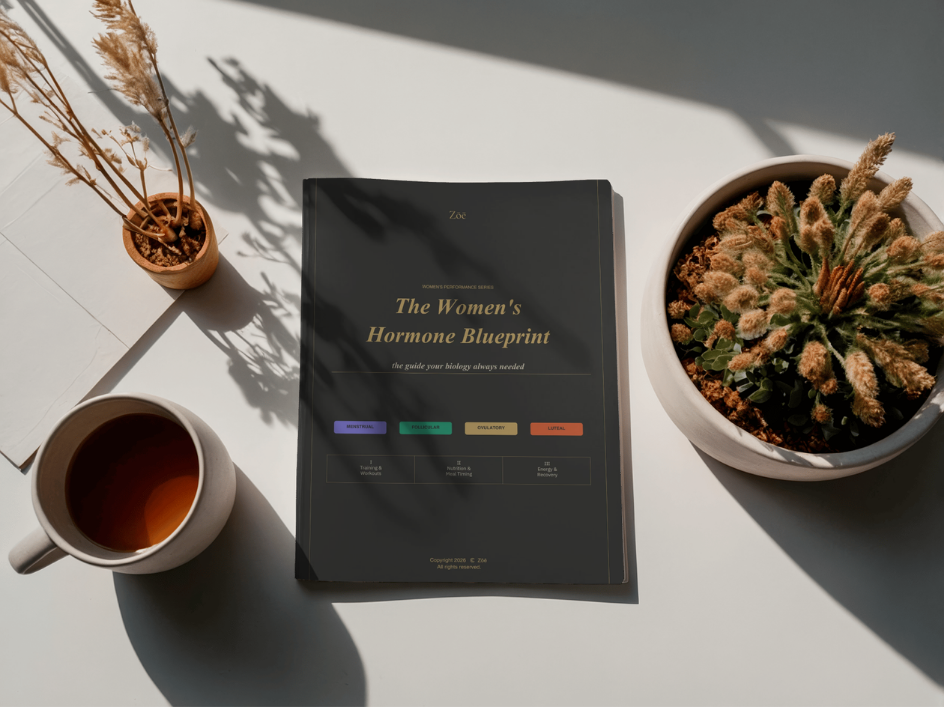
The complete hormonal picture — including testosterone, estrogen and cortisol mapped across all four phases — is in The Women's Hormone Blueprint. Understanding where each hormone sits in each phase of your cycle gives you the framework to identify which phase your libido naturally peaks and which interventions support each hormone most effectively.