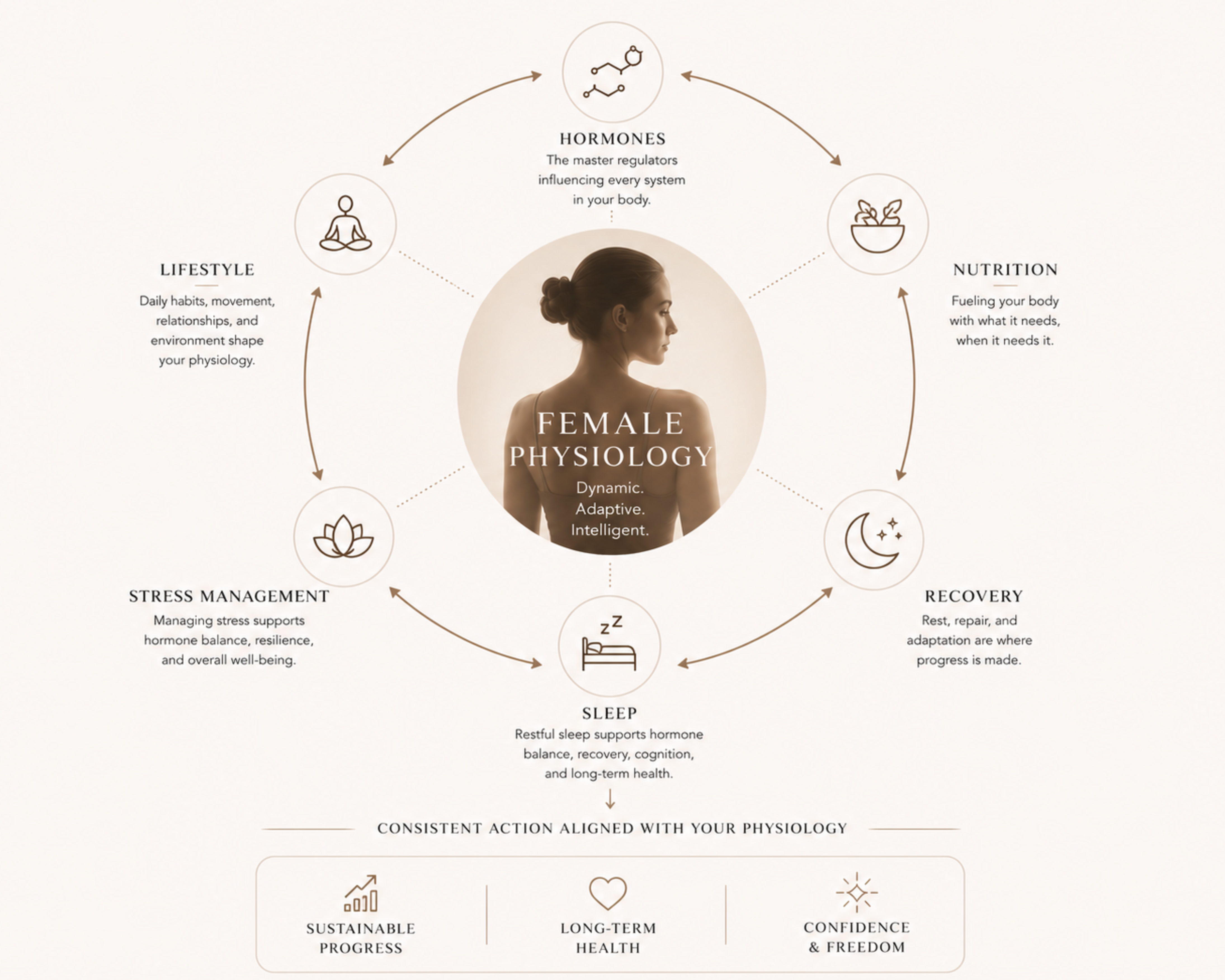
The cortisol-serotonin mechanism behind this
Intense exercise is a genuine physical stressor — it raises cortisol on purpose, and normally that spike resolves quickly and leaves you feeling better for it. But in the late luteal phase, falling estrogen has already reduced your serotonin availability, and progesterone withdrawal has lowered GABA activity, the nervous system's calming signal. Layer a high-cortisol workout on top of a nervous system that is already running with less calming support, and the same exercise that usually regulates your mood can instead tip it further into anxious or flat territory.
This is not a universal rule for every woman in every cycle — individual sensitivity varies meaningfully — but it is a well-documented pattern worth tracking in your own experience rather than dismissing as "just a bad day."
Which phase makes this most likely
This effect is most common in the final days before your period, when estrogen and progesterone are both dropping simultaneously. It is far less common in the follicular phase, when rising estrogen supports both mood and recovery, which is why the same workout style can feel completely different depending on timing alone.
How to adjust so training helps again
This does not mean stopping training in the premenstrual week. It means shifting intensity — trading a maximal-effort session for strength work at a moderate load, or a hard run for a longer, easier one — so the workout still supports your nervous system instead of taxing it further. At Zōē, this adjustment is built into the plan by phase, rather than left for you to figure out after a bad session.
Alongside Andreea and Francesco's direct coaching, The Zōē Method includes access to Mr Z — an AI coaching assistant built by Francesco Zen on ZTraining's 18-year coaching methodology, available via Telegram between sessions for real-time questions on training days, travel, and nutrition choices.
Andreea Mighiu is a women's hormonal health educator and the founder of Zōē. She works alongside a registered dietitian and an endocrinologist to ensure content reflects current clinical understanding. She is an educator, not a physician — Zōē's content is designed to inform, not to replace personalised medical advice.