The tracking landscape in 2026 — what is available and what it tells you
The home hormone tracking space has expanded significantly. In 2026 women can access quantitative urine hormone tests, wearable devices measuring hormonal proxies, sophisticated cycle tracking apps and a range of simple low-tech methods that have been reliable for decades. The question is not which tool is best in absolute terms — it is which tool provides the information you specifically need at a cost and complexity level that is sustainable for you.
The most important principle before investing in any tracking tool: symptom tracking is data. Your energy levels, mood, sleep quality, skin changes, libido, cognitive clarity and physical performance all correlate with your hormonal phase. Tracking these carefully across six complete cycles in The Aligned Woman Journal provides a rich hormonal picture without any additional technology.
BBT tracking — the foundational tool
Basal body temperature tracking is the most consistently reliable free method for identifying your ovulation pattern and confirming ovulation is occurring. It requires only a basal thermometer (more precise than a standard thermometer, available for under £15) and five minutes of consistent morning routine.
The method: take your temperature before getting up, before eating, drinking or moving significantly. Record it immediately. Do this every day of your cycle. Over one to two cycles a clear pattern will emerge — a biphasic temperature chart showing lower temperatures in the follicular phase and a sustained rise of 0.2 to 0.5 degrees after ovulation that persists until menstruation.
What BBT tells you: whether ovulation is occurring (a sustained rise confirms it), approximately when in your cycle ovulation occurred, the length of your luteal phase (from the rise to menstruation), and whether your luteal phase is adequate (less than 10 days suggests luteal phase defect). What it does not tell you: when ovulation is about to occur — the temperature rise happens after ovulation, not before.
At-home hormone tests — what is worth it
At-home quantitative hormone tests have improved substantially in recent years. Services like Hertility in the UK and similar providers in the US now offer accurate urine-based testing for oestradiol, progesterone, LH, FSH, testosterone and AMH — with results in 15 to 30 minutes or via laboratory analysis.
The key limitation: a single hormone reading tested on one day of one cycle tells you relatively little. Hormones fluctuate enormously across the cycle and between cycles. The value of at-home testing comes from: testing on the correct cycle day (FSH and oestradiol on days 2 to 5; progesterone on day 21), testing across multiple cycles to identify patterns rather than relying on single readings, and using the results to contextualise the symptom patterns you have been tracking rather than treating them in isolation.
The most clinically useful at-home test for most women: day 21 progesterone (confirms ovulation and assesses luteal phase adequacy) and day 3 FSH with oestradiol (baseline follicular assessment). These two tests, repeated across two to three cycles and interpreted alongside symptom data, provide the hormonal picture that makes self-knowledge actionable.
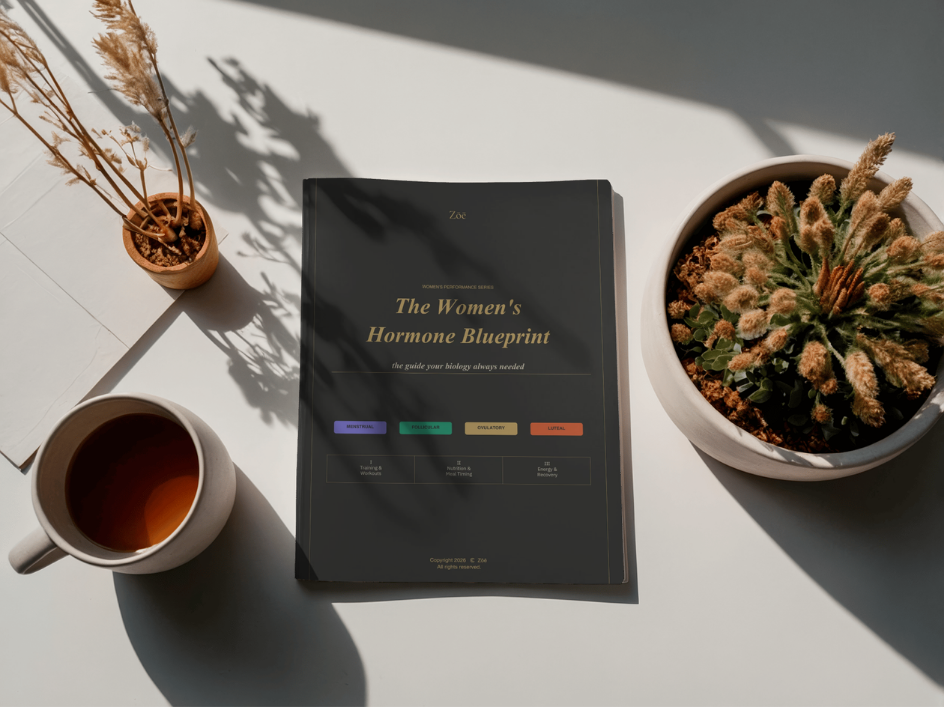
For the complete framework of what your hormonal patterns mean and what to do about them — The Women's Hormone Blueprint gives you the science behind every hormonal signal and the practical response to each one. Understanding what to do with the data your tracking produces is as important as the tracking itself.